




 09:23 2026-04-17
According to current statistics, China has risen to the top of the world by purchasing power parity (PPP). Against the backdrop of the war in the Middle East, China's GDP growth unexpectedly accelerated in Q1, beating forecasts and expanding by 5%. But the Chinese Communist Party's plans for the coming years look even more ambitious. China is moving away from copying someone else's "tomorrow" and already setting its own rules of the game, where technology ensures aesthetics and nature becomes a partner rather than a resource.
 438
438 8
8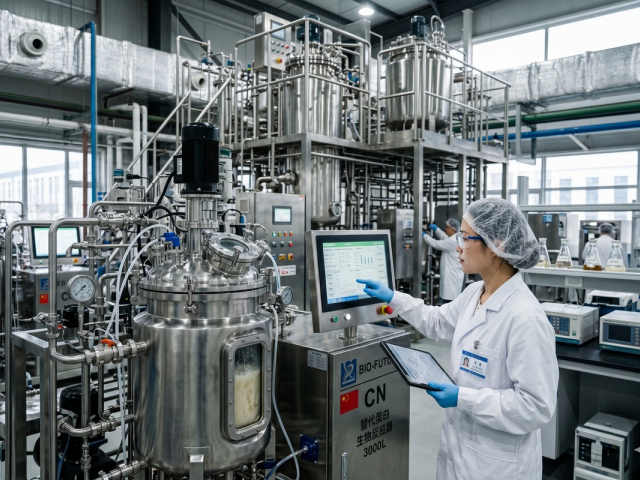


Children prioritized
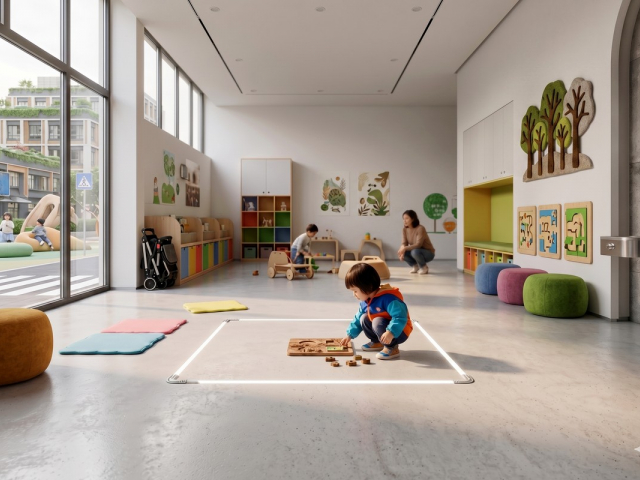
China is tackling its demographic crisis not only with subsidies but also with urban design. The concept of a “child‑friendly society” means that all new urban infrastructure is planned with the needs of small citizens in mind. It is the “one‑meter perspective”: safe crossings, abundant nurseries, inclusive parks, and condominiums designed to make raising a child convenient and affordable. Combined with a “birth‑friendly” ideology, China is attempting to create conditions in which starting a family is not seen by young people as financial suicide.
Protein revolution: food from test tubes
Food security for 1.4 billion people is a critical task. China has advanced a Great Food Concept in which traditional farming is complemented by synthetic biology. The food of the future here will come from bioreactors, laboratories, and the ocean depths. China is heavily investing in alternative protein production to reduce dependence on imported soy and feed. This is both a response to climate challenges and a way to feed the nation with high‑calorie, low‑cost products produced by high technology rather than pastures.
Understory economy: money under canopy
Instead of turning forests into timber, China has decided to profit from preserving them. The “understory economy” is a new state strategy that transforms forest areas into high‑tech farms. Here, valuable medicinal herbs, mushrooms, and berries are cultivated without cutting a single tree. For millions of farmers in mountainous regions, this is a path out of poverty into the middle class without harming the environment. This intelligent symbiosis leaves nature intact while supplying the market with eco‑clean products whose demand in cities is growing exponentially.
Low‑air economy: keep congestion on ground
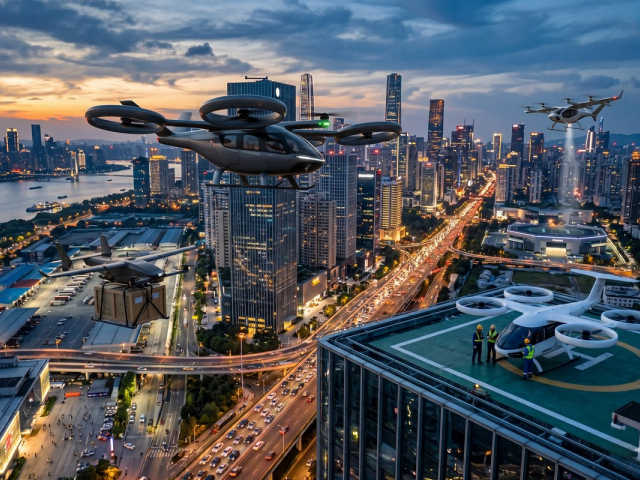
China has officially declared the “low‑altitude economy” a strategic industry. This involves exploiting airspace up to two kilometers. The plan calls for deploying eVTOLs — electric vertical‑takeoff‑and‑landing vehicles. Heavy cargo drones will replace trucks, and air taxis should become commonplace in megacities. This is a complete logistics overhaul, from emergency response to tourist routes.
Electromobility expansion: BYD
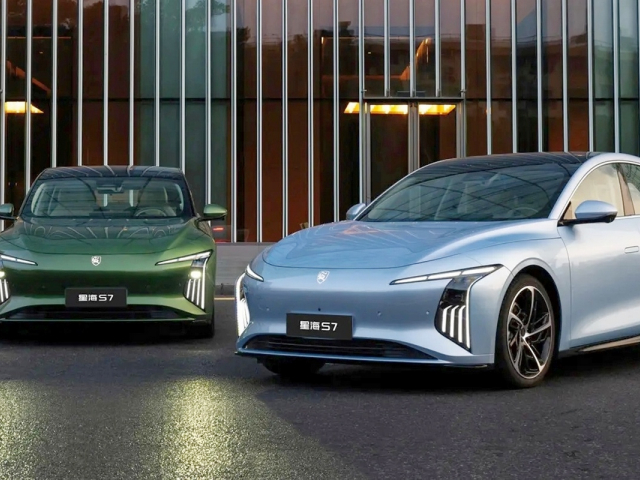
By 2030, the plan is a full switch of public and logistics transport to electric propulsion. China’s auto industry is no longer catching up — it dominates. Giants like BYD, NIO, and XPeng already control more than 60% of the global EV market. China is building the densest charging network in the world and rolling out level‑5 autonomous driving systems. The PRC intends to make its brands synonymous with luxury and reliability, displacing European auto giants. An electric car from China will no longer be “cheap” — it will be “high‑tech.”
Battery battle: energy of future
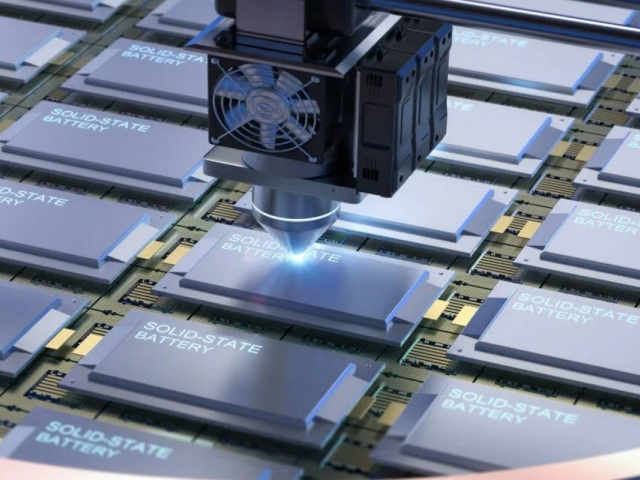
China’s main trump card is control over battery supply chains. But the 2030 target is even more ambitious: mass production of solid‑state batteries. China has created an All‑China Platform for Solid‑State Battery Innovation (CASIP), bringing together academia and industry. The plan is simple: make charging as fast as refuelling with petrol and extend range to 1,000+ km. Mastery of the “ideal battery” technology would turn China into the world’s energy hub, one on which everyone — from smartphone makers to automakers — would depend.
Satellite internet and autopilot: global cloud
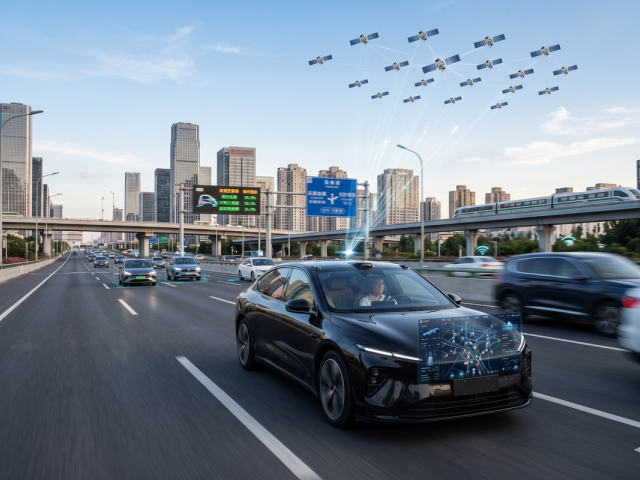
The five‑year plan includes building its own satellite network for the global internet — an analogue to Starlink but focused on managing autonomous transport. Chinese EVs will be constantly connected to a “cloud brain” via the satellite network. This will enable an ideal autopilot that sees the road not only through its own cameras but through the eyes of the entire system. By 2030, China aims to create a unified digital nervous system for the country, where transport, manufacturing and housing become parts of one huge, self‑learning intelligence.
Beautiful digital life: aesthetics of algorithms
A paragraph in the Digital China plan sounds unusual for an official document: Creating a beautiful intelligent life. Here, technology is not only about efficiency but about harmony. Smart homes and digital communities should be aesthetically pleasing. The digitalization of leisure, tourism, and everyday life is intended to make living beautiful and easy. China plans to build an environment where neural networks manage lighting, climate, and logistics unobtrusively, creating comfort and aesthetic pleasure for every citizen.


-
Grand Choice
Contest by
InstaForexInstaForex always strives to help you
fulfill your biggest dreams.JOIN CONTEST -
Chancy DepositDeposit your account with $3,000 and get $1000 more!
In April we raffle $1000 within the Chancy Deposit campaign!
Get a chance to win by depositing $3,000 to a trading account. Having fulfilled this condition, you become a campaign participant.JOIN CONTEST -
Trade Wise, Win DeviceTop up your account with at least $500, sign up for the contest, and get a chance to win mobile devices.JOIN CONTEST


